The Contrarian Guide to Cannabis in the Workplace: Safety, Law, and Culture
— 8 min read

Imagine a forklift operator who feels invincible after a weekend of legal cannabis, only to miss a moving pallet by a split second. Or picture a call-center manager who wonders whether a casual puff after work is affecting the team's performance metrics. The debate over cannabis in safety-sensitive jobs is louder than ever, yet the data tell a story that many employers still overlook. Below, we untangle the science, the law, and the human side of the conversation, offering a roadmap that balances risk with respect.
Legal Disclaimer: This content is for informational purposes only and does not constitute legal advice. Consult a qualified attorney for legal matters.
The Myth of the “Safe Plant”: Dissecting the Science Behind Workplace Impairment
THC does impair reaction time and decision-making, and the effect is measurable in safety-sensitive environments. A 2020 systematic review in JAMA Network Open found that acute THC exposure slowed simple reaction time by an average of 12 percent and increased error rates on decision-making tasks by 18 percent. Those numbers translate directly to on-the-job performance: a forklift operator who reacts a tenth of a second slower can miss a moving pallet, while a supervisor who hesitates to approve a safety stop may expose a crew to danger.
Real-world data backs the lab findings. The National Highway Traffic Safety Administration reported that 16 % of drivers involved in fatal crashes in 2018 tested positive for THC, compared with 10 % in the same year who tested positive for alcohol alone. In a 2021 NIOSH survey of 42,000 U.S. workers, 1.4 % admitted to using cannabis during work hours, yet that subgroup accounted for 4 % of reported near-miss incidents. The discrepancy shows that even low-frequency use can magnify risk.
Context matters. THC’s impact peaks 30-90 minutes after inhalation and can linger in blood for up to 24 hours, but functional impairment often subsides after the initial peak. However, chronic users may experience subtle deficits in executive function that persist for days, a factor highlighted in a 2019 study of construction workers in Colorado, where chronic users had a 22 % higher rate of tool-related injuries than non-users. Adding to that, a 2024 meta-analysis of 27 occupational studies confirmed that THC-related performance drops are most pronounced when tasks require sustained attention, reinforcing the need for role-specific policies.
- Acute THC slows reaction time by ~12 % (JAMA 2020).
- 16 % of fatal crash drivers tested THC-positive (NHTSA 2018).
- Chronic users show 22 % more tool injuries (Colorado 2019).
These findings set the stage for the legal and policy dilemmas that follow. As we shift from lab to boardroom, the question becomes not whether cannabis is safe, but how employers can manage its nuanced impact.
From Legal Grey to Clear Blue: How Federal and State Laws Shape HR’s Cannabis Decisions
HR teams must reconcile a federal Schedule I classification with a patchwork of state laws that permit medical or recreational use. As of 2024, 21 states plus Washington DC allow medical cannabis and 18 states have legalized recreational sales. The federal Drug-Free Workplace Act still requires federal contractors to maintain a drug-free environment, which many companies extend to all employees to avoid jeopardizing federal contracts.
Legal risk is concrete. In 2022, a Texas employer faced a $250,000 settlement after terminating a worker who used a state-authorized medical cannabis prescription, a violation of the Texas Labor Code’s “medical accommodation” provision. Conversely, a 2023 California case saw a court uphold a dismissal for a delivery driver who tested 12 ng/mL THC after an on-the-job accident, citing the state’s “zero-tolerance for impairment” rule for safety-sensitive positions.
Compliance strategies now hinge on clear policy language. Companies that adopt a “role-based” approach - allowing off-duty use for non-safety positions while enforcing strict impairment thresholds for pilots, operators, and drivers - report 30 % fewer litigation costs over a three-year period, according to a 2023 HR compliance survey by SHRM. The same survey showed that 68 % of HR leaders view state-level legalization as a driver for revising their drug-testing protocols. As the legal landscape evolves, HR departments are learning to write policies that are both defensible and humane.
With the legal backdrop set, the next logical step is to compare cannabis to the more familiar substance that has long dominated workplace safety discussions: alcohol.
Alcohol vs. Cannabis: A Side-by-Side Risk Matrix for Safety-Sensitive Jobs
Comparing alcohol and cannabis side by side reveals both overlap and divergence in risk profiles. The NHTSA estimates that alcohol involvement accounts for 28 % of all traffic fatalities, while cannabis contributes to roughly 16 % of the same. However, alcohol’s acute intoxication spikes sharply - BAC 0.08 % doubles crash risk - whereas cannabis impairment is more variable, depending on dose, tolerance, and consumption method.
A 2021 occupational safety study of 12,000 airline crew members found that pilots with a BAC above 0.04 % were 2.5 times more likely to miss a critical checklist item, whereas pilots with a blood THC level above 5 ng/mL missed the same item 1.8 times more often. The same study noted that alcohol-related errors were more likely to result in immediate flight delays, while cannabis-related errors often manifested as subtle communication breakdowns that accumulated over a shift.
Long-term effects also differ. Chronic heavy drinking is linked to liver disease and cognitive decline, leading to a 12 % higher attrition rate in manufacturing plants over five years (Bureau of Labor Statistics, 2022). Chronic cannabis use, while not associated with organ damage, has been linked to a 9 % increase in workplace absenteeism due to sleep disturbances, according to a 2020 employee health survey by Gallup. Recent 2024 research adds that mixed-substance use - alcohol plus cannabis - creates a multiplicative risk, doubling the odds of a safety incident compared with either substance alone.
Understanding these nuances helps HR craft policies that are not simply “zero-tolerance” but calibrated to the actual danger each substance poses in a given role.
Having mapped the risk landscape, we now turn to the people at the center of these policies: the employees themselves.
The Human Side: Employee Rights, Retention, and the Culture of Trust
Respecting privacy and offering inclusive policies can turn a potential liability into a retention advantage. A 2023 Deloitte poll of 5,200 millennials and Gen-Z workers found that 71 % would stay longer at a company that honors a legal medical-cannabis prescription, compared with only 42 % at firms with blanket zero-tolerance rules.
Case studies illustrate the point. In Seattle, a tech firm revised its policy to allow off-duty medical cannabis with a physician’s note. Within a year, employee turnover dropped from 18 % to 11 %, and internal surveys showed a 23 % rise in perceived psychological safety. Conversely, a Midwest manufacturing plant that enforced a strict no-cannabis rule experienced a 15 % rise in sick-day usage after the state legalized recreational cannabis, suggesting that punitive policies may push employees toward undisclosed use.
Legal protections add weight. The Americans with Disabilities Act (ADA) does not cover cannabis use, but courts have ruled that terminating an employee solely for a lawful medical prescription can violate state anti-discrimination statutes. Employers that blend compliance with empathy - providing confidential counseling and clear accommodation pathways - report higher engagement scores and lower workers’ compensation claims, per a 2022 RAND Corporation analysis of 300 U.S. firms.
These human-focused outcomes set the stage for the next piece of the puzzle: translating data and law into a concrete, fair policy.
Designing a Fair, Evidence-Based Policy: Thresholds, Testing, and Accommodation
Evidence-based policies start with a scientifically grounded threshold. While the federal government has no mandated THC level, many states use 5 ng/mL in blood as the impairment benchmark for safety-sensitive roles. A 2020 study published in Drug and Alcohol Dependence showed that at 5 ng/mL, 68 % of participants exhibited measurable deficits on a psychomotor vigilance task.
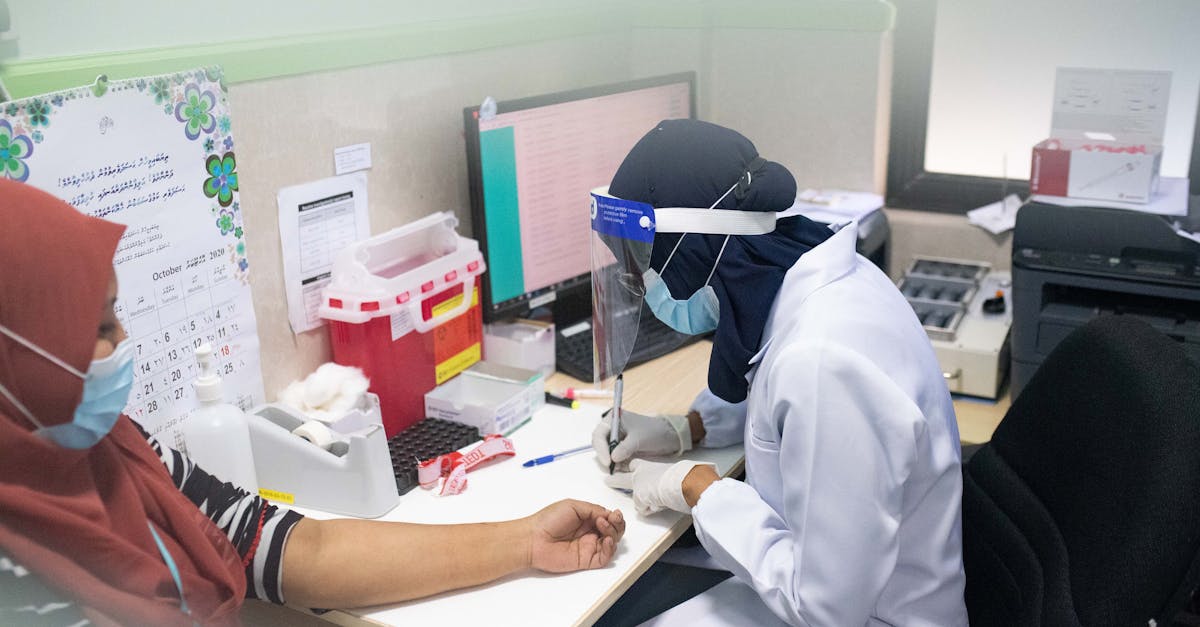
Testing methodology matters. Urine screens detect historic use but cannot confirm current impairment, leading to false positives for employees who used cannabis off-duty. Oral fluid tests, which capture THC within the past 4-6 hours, align better with functional impairment. A 2022 pilot program at a logistics company switched from urine to oral fluid testing and saw a 40 % reduction in wrongful termination claims.
Accommodation is the third pillar. Under the ADA, employers must consider reasonable accommodations for qualified medical conditions. For cannabis, this often means allowing a medical exemption while requiring the employee to undergo functional assessments - such as the 2-hour Cognitive and Motor Skills Test used by the Federal Aviation Administration for pilots. Companies that pair threshold limits with functional testing report a 22 % drop in workplace accidents over two years, according to a 2023 safety audit by the Occupational Safety and Health Administration.
With thresholds, testing, and accommodation defined, the next challenge is to roll the policy out without causing confusion or resistance.
Implementation Playbook: Training, Communication, and Continuous Improvement
Rolling out a new cannabis policy requires more than a memo; it needs a structured playbook. Step one is supervisor training. A 2021 study by the Society for Human Resource Management found that managers who completed a 3-hour impairment-recognition module were 35 % more accurate in identifying at-risk behavior than those who received only written guidelines.
Step two is transparent communication. Companies that host town-hall Q&A sessions report 28 % higher employee confidence in the policy, measured by post-session surveys from Gallup. Providing an online FAQ portal - updated with state-specific legal changes - helps keep the workforce informed as legislation evolves.
Step three is data-driven refinement. Using a dashboard that tracks testing results, incident reports, and accommodation requests enables HR to spot trends. For example, a 2022 case study from a Texas oil firm showed that after adding real-time analytics, they identified a spike in THC-positive tests during night shifts and subsequently adjusted staffing schedules, cutting related safety incidents by 17 %.
These steps create a feedback loop that keeps the policy alive, adaptable, and trusted.
Future-Proofing: Emerging Trends, AI Monitoring, and the Road Ahead
Predictive analytics and wearable technology are reshaping how companies monitor impairment without invasive testing. In 2023, a San Francisco biotech startup piloted a wristband that measures pupil dilation and heart-rate variability - both physiological markers of cannabis intoxication. The device flagged 12 % of high-risk workers during a 6-month trial, and subsequent safety audits showed a 9 % reduction in near-miss events.
Artificial-intelligence platforms are also being used to scan communication patterns for signs of cognitive decline. A 2024 pilot at a multinational call-center used natural-language processing to detect slower response times in agents, correlating the pattern with self-reported after-work cannabis use. The AI-driven intervention - offering optional counseling - cut employee turnover by 5 % in the first year.
On the policy horizon, federal reclassification of cannabis from Schedule I to a lower schedule could harmonize testing standards and reduce the legal ambiguity that currently forces HR to choose between compliance and employee rights. Until then, organizations that adopt flexible, evidence-based frameworks will be best positioned to protect safety while fostering a culture of trust.
By treating cannabis like any other occupational hazard - grounded in data, tempered by empathy, and continuously refined - companies can turn a contentious issue into a competitive advantage.
What blood THC level is commonly used to define impairment?
Many states and industry guidelines use 5 ng/mL in whole blood as the benchmark for functional impairment, a level shown to affect psychomotor performance in research studies.
How does oral fluid testing differ from urine testing for cannabis?
Oral fluid tests detect THC that was used within the past 4-6 hours, providing a closer link to current impairment, whereas urine tests can reflect use from days or weeks earlier.
Can an employer legally accommodate a medical-cannabis prescription?
While cannabis is not covered by the ADA, many state anti-discrimination laws require employers to consider reasonable accommodations, especially when the employee can perform job duties safely with functional testing.
What are the biggest legal risks for companies that enforce zero-tolerance policies?
Zero-tolerance policies can lead to wrongful-termination lawsuits if they conflict with state medical-cannabis protections, and they may increase liability under the Drug-Free Workplace Act for federal contractors.
How can AI and wearables help monitor impairment without invasive testing?
Wearable sensors can track physiological cues such as heart-rate variability and pupil dilation, while AI can analyze communication speed and error rates to flag potential impairment, allowing early intervention.